How we work.
Care that takes your goals as seriously as you do.
What you pay for is attention and judgement. Time to understand your situation, careful thinking about what to do, and a willingness to change course when the evidence says so.
-
Understand the person
What you're asking of your body, and why it matters.
Your work, family, training and goals decide what a good outcome looks like, so that's where we start.
Read more
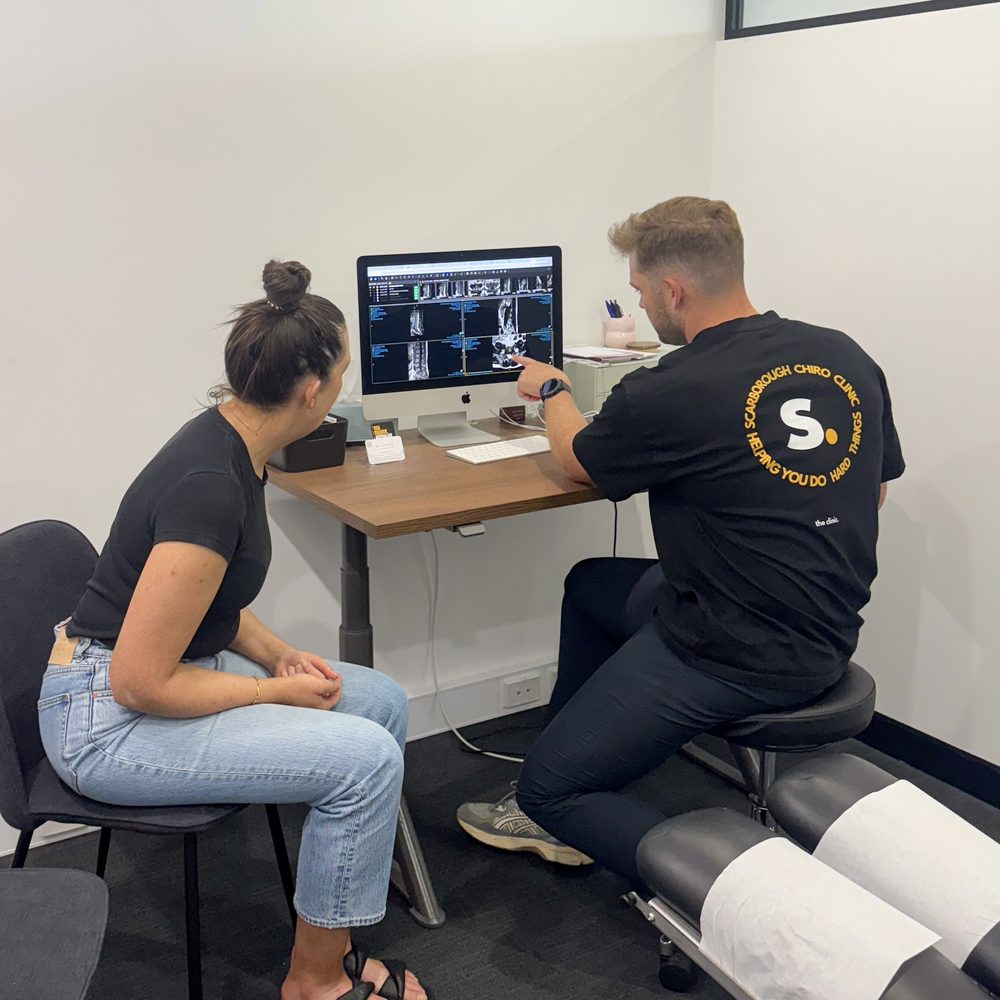
Most of the useful information comes from your history: how the problem started, what makes it better or worse, what you've already tried, and what a normal week looks like for you.
We'll also ask what you're working towards. Less pain is a fair goal. So is picking up your toddler without bracing, getting through a week on site, or finishing a first half marathon. Those goals shape the plan, and they're how we judge whether it's working.
-
Make sense of the problem
A considered assessment and a straight explanation.
What's likely going on, what we can help with, and what needs someone else.
Read more
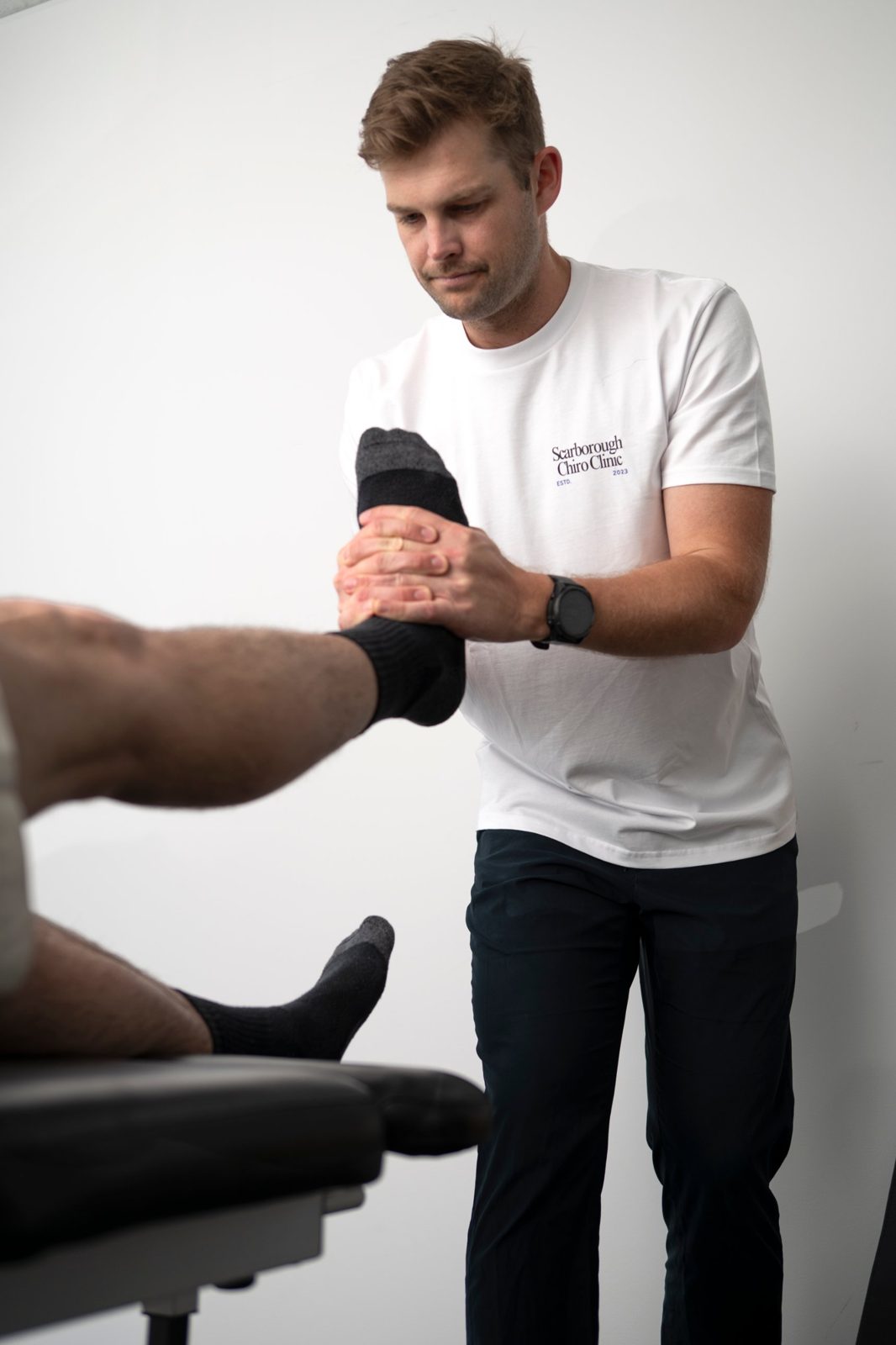
The examination is chosen to test the most likely explanations, and to screen for anything that needs a GP or imaging first.
The answer is rarely one tight muscle or one stiff joint. More often a few things have added up, such as a jump in training, a run of poor sleep, a busy month at work or strength that has slipped.
Scans are sometimes useful and often unnecessary. If imaging would change what we do, we'll recommend it and explain why. If you already have scans, bring them along.
-
Build a plan that fits
Start with what you need to keep doing.
Then decide what changes for now. Treatment, rehab and practical advice, shaped around your life.
Read more
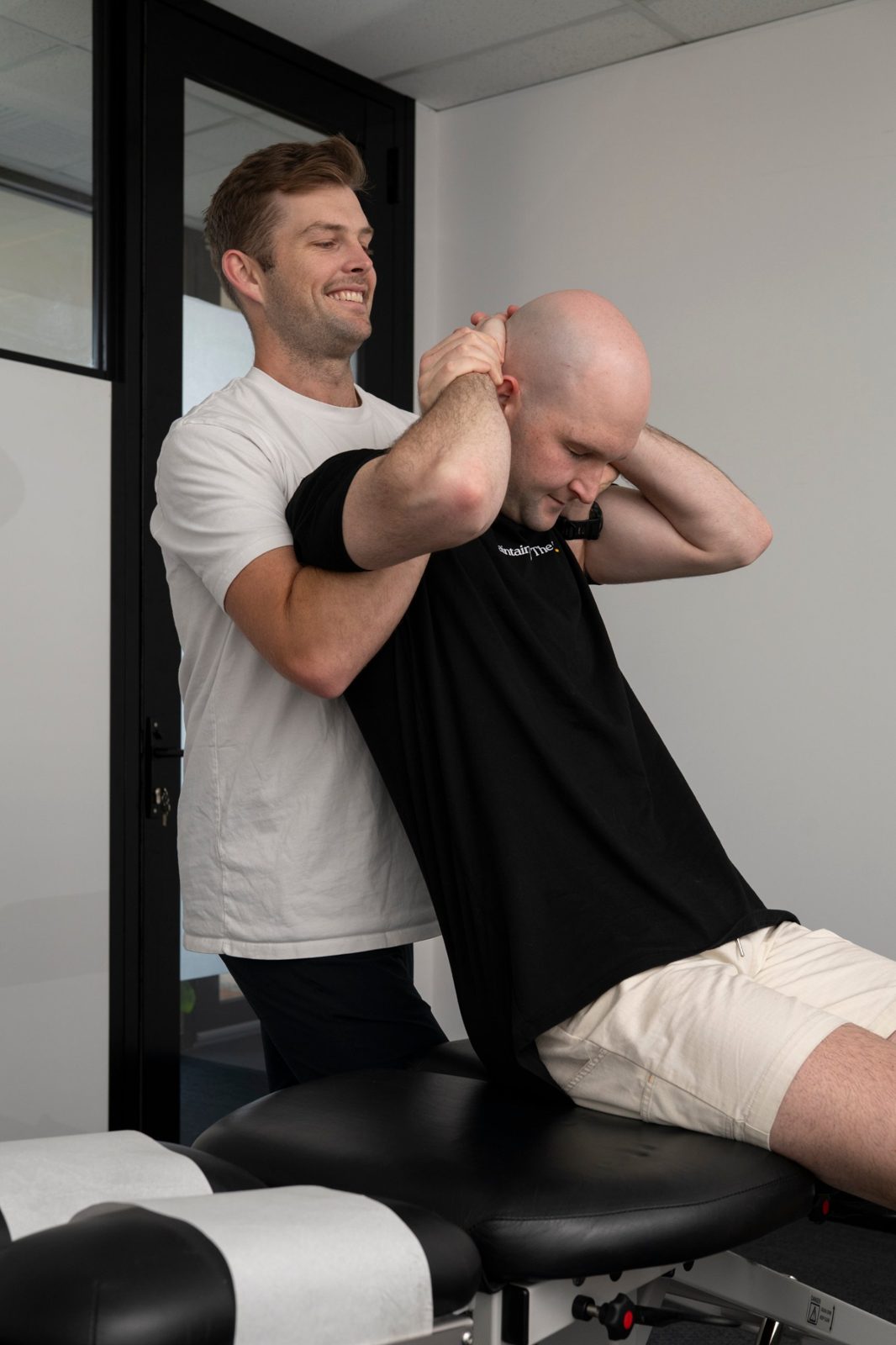
Treatment may include adjustments, joint mobilisation, soft tissue work, dry needling, exercise and advice about load. Not every technique is used every visit, and you can say no to any of them.
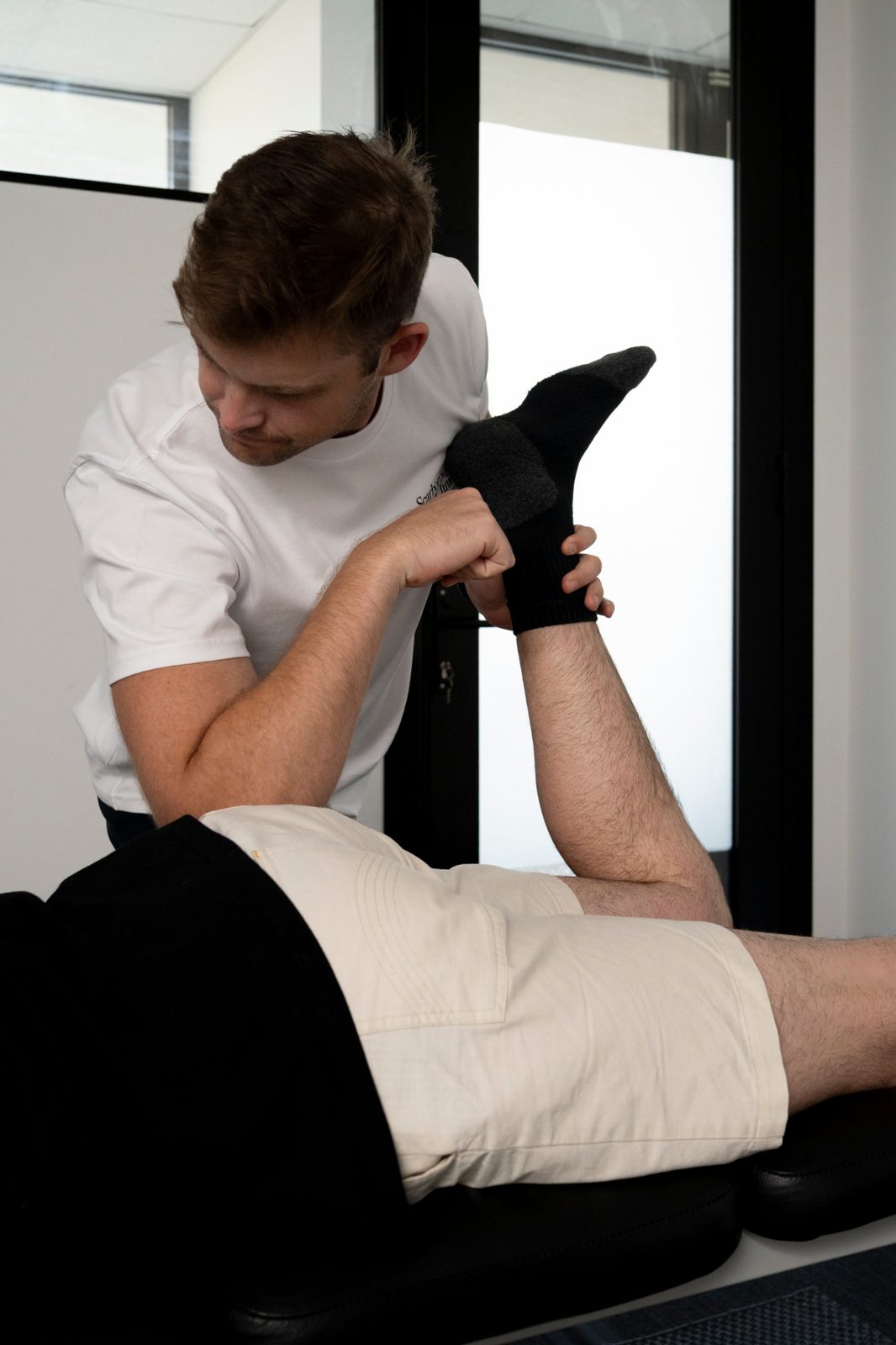
Rehab is prescribed the way a good coach programs training: a starting point based on testing, a clear dose and a plan to progress it. New exercises are taught and checked in the clinic. For some people it's ten minutes on the lounge room floor. For others it's changes to how the heavier jobs at work get done.
Your part happens between visits. If the plan doesn't fit around your week, tell us and we'll change it.
-
Respond and adapt
Progress is measured, and the plan changes when it should.
Re-tests every few visits. Appointments get spaced out, the plan changes, or care finishes.
Read more
At the first visit we record a few measures that matter for your problem. That might be how far you can bend, how many single-leg calf raises you can do, or how long you can sit before the pain starts. They're re-tested at reviews, so decisions rest on more than how the last few days felt.
If you're not progressing as expected, we change the approach or refer you to someone better placed. When the agreed measures are met and you're confident managing on your own, care finishes. A check-in before a big block or a busy season is your call, never a condition of care.
Resolve, Restore, Build.
How we think about care. Not a program everyone has to complete. Some people only need the first stage, and some start at the last.
Resolve
Settle what's happening now
Assessment, treatment, a clear explanation and early movement.
Restore
Get back to your normal
Strength, tolerance and confidence rebuilt to what your week needs.
Build
Room for what's next
Extra capacity for a race, a heavier job or more left at the end of the week. Optional.
Good questions.
How many appointments will I need?
It depends on what's found and what you need to get back to. Two people with similar back pain can need very different plans: one strained something at the weekend and needs a couple of visits, the other has had the same pain for three years and has a longer rehab ahead. You get an estimate on day one with the reasoning behind it. There are no prepaid packages or contracts.
Can I come just once?
Yes. Some people want an assessment and a plan to run with on their own. Tell us at the start and we'll make the most of the time.
Do I have to be adjusted?
No. It's one option alongside mobilisation, soft tissue work and exercise. If you'd rather not have your neck or back adjusted, we'll work another way.
When would you refer me to someone else?
When a GP, imaging, a specialist, a physio, a podiatrist or a psychologist would serve you better, either instead of us or alongside. Some symptoms need medical assessment first, such as unexplained weight loss, changes to bladder or bowel control, or pain that's worse at night and unrelated to movement. These are screened for at the first visit.
Start with a proper assessment.
45 minutes, $140. No referral needed.